
Turkey's "Massacre Law": When Governments Turn Against Dogs
Turkey's war against stray dogs
Sharika Sinha
8/5/20245 min read
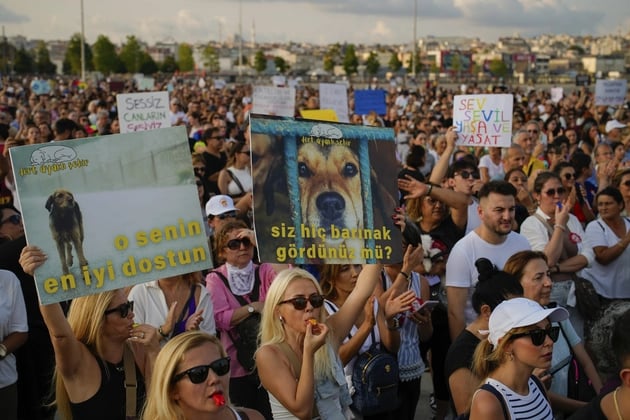
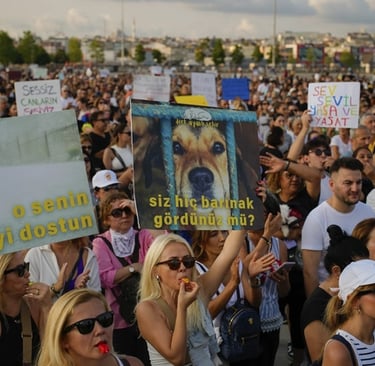
I thought I'd reached my limit for being shocked by government cruelty toward animals, but then Turkey passed what opposition lawmakers correctly called a "massacre law." I'm struggling to understand how a country can look at 4 million innocent stray dogs and decide that mass killing is an acceptable solution. This isn't animal control - it's government-sanctioned genocide against defenseless creatures who have lived alongside humans for generations.
What Turkey Actually Legalized
In July 2024, Turkey's parliament passed legislation that essentially gives local governments permission to kill stray dogs en masse. The law allows for euthanization of dogs deemed "dangerous" or having "untreatable diseases," but here's the terrifying reality: there's no clear definition of what constitutes "dangerous," and with 4 million strays but only 322 shelters capable of housing 105,000 dogs, the math is horrifying.
We're talking about the potential elimination of 4 million dogs - that's equivalent to killing every single dog in New York City, Los Angeles, Chicago, and Houston combined. These aren't aggressive feral animals; these are street dogs who have coexisted with Turkish communities for centuries, often fed and cared for by local residents.
The law was passed by a vote of 275 to 224 after two days of intense parliamentary debate, with President Erdogan's Justice and Development Party and their ultranationalist allies supporting the measure despite widespread public opposition.
The Tragic Catalyst and Political Response
The legislation gained momentum after several tragic incidents, most notably the death of 2-year-old Rana El Selci, who was killed by a pack of stray dogs in October 2024. According to government reports, 65 people have died from dog attacks since 2022, creating genuine public safety concerns that politicians exploited to justify extreme measures.
While these deaths are absolutely tragic and families deserve protection, the response of killing 4 million innocent animals because of incidents involving a tiny fraction of the population represents a catastrophic failure of proportional governance. It's analogous to demolishing an entire city because of problems with a few dangerous buildings.
The political opportunism behind this law is particularly disturbing. Rather than investing in proven solutions like expanded spay/neuter programs, better shelter infrastructure, or targeted interventions for genuinely problematic animals, politicians chose mass killing because it appeared decisive and cost-effective in the short term.
The Alternative Solutions That Were Ignored
Turkey had previously implemented a "catch, neuter, and release" program that had shown promise in controlling stray populations humanely. This approach, successfully used in other countries, gradually reduces populations while addressing public health concerns through vaccination programs.
The government could have dramatically expanded this program, built additional shelter capacity, created better training for animal control officers, or focused enforcement efforts on genuinely dangerous animals rather than declaring war on all strays. These evidence-based approaches require more initial investment but create sustainable, humane solutions.
Instead, they chose the option that requires the least creative problem-solving and the most violence against innocent animals. The law doesn't even require shelters to attempt adoption before euthanization - it simply permits killing if animals aren't adopted within undefined timeframes.
The Heroic Resistance Movement
What gives me some hope is the massive resistance from Turkish citizens who refuse to accept this atrocity. Thousands of protesters have taken to the streets in cities across Turkey, with demonstrations also occurring internationally to pressure the government to reconsider.
Animal rights activists are working around the clock to rescue as many dogs as possible before the law's full implementation. However, the government has responded with authoritarian tactics, arresting people who interfere with dog-catching operations and threatening activists with legal consequences for protecting animals.
One particularly disturbing incident involved a man being arrested in Istanbul for attempting to prevent dog catchers from using tranquilizer darts without veterinary supervision - a clear violation of basic animal welfare protocols that the government is now ignoring in its rush to eliminate strays.
The International Implications That Terrify Me
The most frightening aspect of Turkey's law isn't just what it means for Turkish dogs - it's the dangerous precedent it establishes internationally. When one government decides that mass killing is an acceptable solution to stray animal populations, it gives permission to other countries to follow suit.
We're already seeing this logic spread. India's Supreme Court has ordered the removal of all stray dogs from Delhi-NCR streets, and while they haven't explicitly called for killing, the reality is that adequate shelter capacity doesn't exist for these animals either.
This represents a fundamental shift toward treating animal welfare as expendable when it conflicts with other governmental priorities. The same utilitarian logic that justifies killing 4 million dogs for public safety could be applied to any vulnerable population deemed inconvenient by those in power.
The Economic and Social Factors Behind the Cruelty
Turkey's economic struggles have undoubtedly contributed to public frustration that politicians are channeling toward stray animals. When people are dealing with inflation, unemployment, and political instability, street dogs become convenient scapegoats for broader societal problems.
The law also serves authoritarian political purposes by demonstrating government "strength" and "decisiveness" to voters who want simple solutions to complex problems. Mass killing appears more decisive than the patient, sustained effort required for humane population management.
This political exploitation of animal welfare issues reflects a troubling trend where vulnerable populations - whether human or animal - become casualties of populist political theater designed to distract from governmental failures in addressing root causes of social problems.
## What International Pressure Can Actually Accomplish
Tourism boycotts and international criticism have proven effective in pressuring Turkey to reconsider animal welfare policies in the past. The country's economy depends heavily on tourism revenue, and sustained international attention to this issue could create meaningful economic incentives for policy changes.
Animal welfare organizations worldwide are coordinating efforts to provide financial and logistical support to Turkish rescuers while maintaining pressure on the government through diplomatic channels. These coordinated international responses are essential because domestic Turkish activists face increasing governmental repression.
However, international pressure must be sustained and comprehensive rather than brief expressions of outrage. The Turkish government needs to understand that this policy will have lasting consequences for the country's international relationships and economic interests.
## The Future This Law Threatens to Create
If Turkey successfully implements mass killing of 4 million stray dogs without sufficient international consequences, it will establish a template that other countries can follow when dealing with their own stray animal populations. This could represent a fundamental regression in global animal welfare standards.
The normalization of government-sanctioned animal genocide also contributes to broader acceptance of violence against vulnerable populations. Societies that accept mass killing of defenseless animals often become more accepting of violence against marginalized humans as well.
Most importantly, this law represents a missed opportunity for Turkey to demonstrate leadership in humane animal population management. Instead of becoming a model for compassionate governance, Turkey is choosing to become a cautionary tale about what happens when political expedience trumps moral responsibility.
Four million innocent dogs are living under a death sentence for the crime of existing in the wrong place at the wrong time. This isn't just about Turkish dogs - it's about what kind of world we're willing to accept.
Dogvocacy
If we don't speak for them, who will?
You can reach me at info@dogvocacy.com
OR
© 2024. All rights reserved.