
The Envigo Horror - When 4,000 Beagles Were Finally Free
4000 Beagles rescued from an illegal breeding facility
Sharika Sinha
5/5/20223 min read
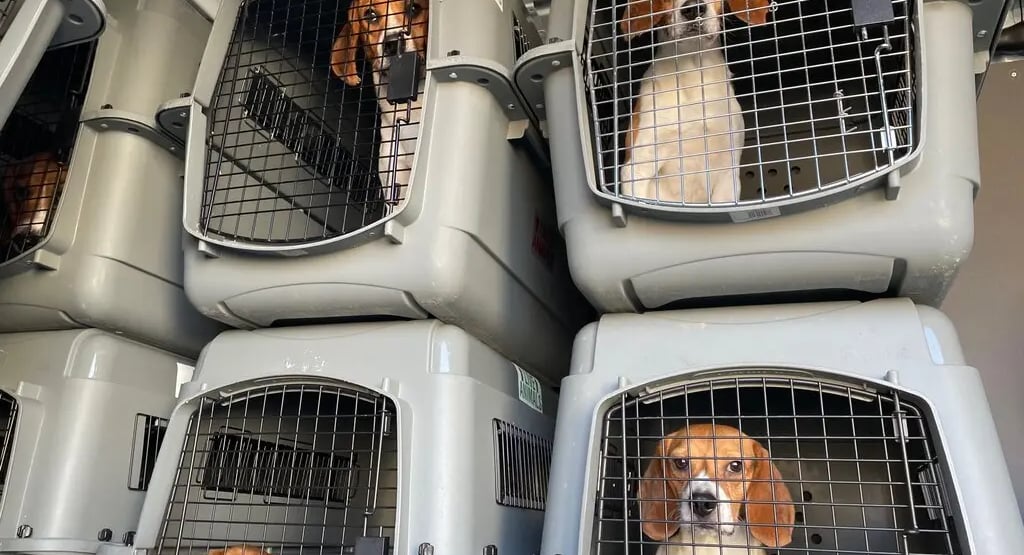
When federal agents raided the Envigo breeding facility in Cumberland, Virginia, in May 2022, they discovered something crazy. Four thousand beagles were trapped in a nightmare designed to make a profit off their suffering.
These weren't just numbers on a report. These were dogs who'd never felt grass under their paws, never experienced the simple joy of running free, never known what it meant to be someone's companion. They existed solely to be bred, sold to laboratories, and used in experiments. Their entire purpose, according to Envigo, was to serve as test subjects for pharmaceutical research.
The conditions were beyond horrific. Federal inspectors found beagles being killed instead of receiving basic veterinary care for easily treatable conditions. Nursing mothers were denied food, and the lucky group that got food was covered in maggots, mold, and feces. Over an eight-week period, 25 beagle puppies died from cold exposure, which is something that could have easily been prevented with minimal effort and basic humanity.
More than 300 beagle puppies died from "unknown causes" between 2021 and 2022, and the company never bothered to investigate why. These dogs were just used as items for sale, not living beings deserving of compassion.
What makes this even worse is that Envigo's leadership knew about these violations since at least July 2021. Internal estimates suggested it would cost about $8 million to bring the facility into compliance with the Animal Welfare Act. The company's response was to delay and decline those requests, prioritizing profits over the lives of thousands of innocent animals.
The rescue effort that followed was amazing. The Humane Society of the United States, working with over 120 shelter and rescue partners across 29 states, spent 60 days removing every single dog from that facility. Volunteers and rescue workers poured their hearts into giving these beagles their first taste of kindness.
Sue Bell from Homeward Trails Animal Rescue describes the feeling as a “ubilation to look at these dogs and be able to say, 'Your suffering is over, your future is about to start.'"
Luckily, this ends with a happy ending. In June 2024, nearly two years after the rescue, Envigo finally faced real accountability. The company (now under parent company Inotiv) was ordered to pay $35 million in fines - the largest penalty in Animal Welfare Act history. Two subsidiaries pleaded guilty to federal crimes: one for knowingly violating the Animal Welfare Act, another for violating the Clean Water Act by dumping contaminated wastewater into local waterways. They weren’t just torturing animals; they were destroying the environment as well. This just shows how important it is to care about all sorts of societal problems, even if we don’t think they relate to us.
Why This Matters
The Envigo case revealed a dark truth about the research animal industry: even with federal oversight, massive suffering can continue for years before anyone takes meaningful action. These beagles were hidden in plain sight, with USDA inspectors documenting violations repeatedly before the Department of Justice finally intervened.
Solutions We Need
Virginia responded by passing the "beagle bills" in April 2022, that extended state animal-cruelty laws to cats and dogs in research facilities and required that animals bred for testing be offered for adoption before euthanasia. We need every state to adopt similar protections. We also need stricter enforcement of existing Animal Welfare Act regulations and significantly higher penalties that actually hurt companies - and people.
The research industry will argue these dogs are "necessary" for scientific progress. But when a facility can't even provide clean food, basic veterinary care, or protection, they've lost any moral authority to claim they're “advancing” science. Those 4,000 beagles deserved better from day one, and it's our job to make sure no other dog suffers like they did.
Dogvocacy
If we don't speak for them, who will?
You can reach me at info@dogvocacy.com
OR
© 2024. All rights reserved.