South Korea's Historic Victory - Ending Centuries of Dog Meat Trade
South Korea makes history - The National Assembly passed a law banning the production and sale of dog meat with a unanimous 208-0 vote
Sharika Sinha
1/5/20244 min read
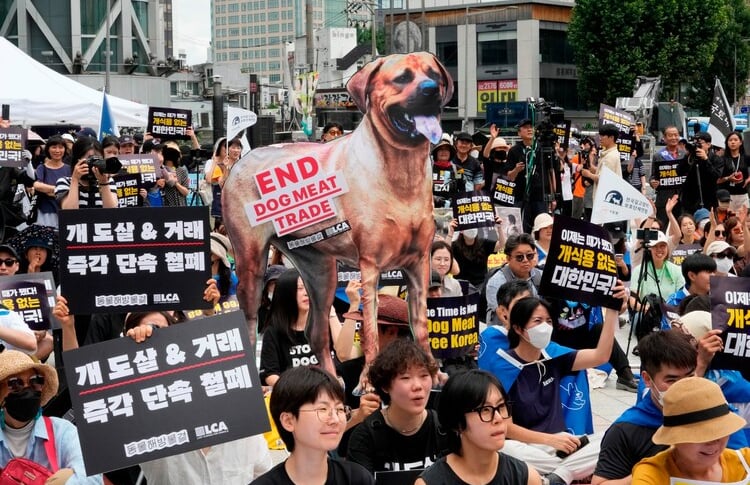
On January 9, 2024, South Korea made history. The National Assembly passed a law banning the production and sale of dog meat with a unanimous 208-0 vote. After decades of debate, pressure from animal rights groups, and changing cultural attitudes, one of the last major dog meat industries in the developed world was finally coming to an end.
This isn't just a win for dogs in South Korea - it's a huge shift that sends ripples across Asia, and the entire world in general. It proves that even deep cultural practices can change when the public's opinions shift and politics align with compassion.
But let's be real about what this law means and what it doesn't. The ban doesn't take full effect until 2027, giving farmers and restaurant owners a three-year grace period to transition out of the industry. Anyone who breeds, butchers, distributes, or sells dog meat after that deadline faces up to three years in prison or fines up to 30 million won (around $22,800). Importantly, the law doesn't punish people who eat dog meat—it targets the supply chain, not individual consumers.
The numbers tell an extremely sorrowful story. Up to one million dogs were being farmed and killed in South Korea every year for human consumption. There were approximately 1,150 dog farms, 34 butchering businesses, 219 distributors, and 1,600 restaurants serving dog meat when the law passed. That's an entire industry built on not only the suffering for humans, but for animals.
JungAh Chae from Humane Society International Korea captured the emotional weight of this moment, revealing, "This is history in the making. I never thought I would see in my lifetime a ban on the cruel dog meat industry in South Korea, but this historic win for animals is a testament to the passion and determination of our animal protection movement."
What makes this victory even more significant is understanding how we got here. South Korea's relationship with dogs has fundamentally transformed over the past few decades. As the country rapidly industrialized and became one of the world's wealthiest nations (13th largest economy), attitudes toward dogs shifted dramatically. Pet ownership exploded—an estimated 6 million dogs now live as cherished family members in Korean homes.
A 2022 Gallup Korea survey revealed the magnitude of this shift: 64% of respondents opposed eating dog meat, up significantly from previous years. Only 8% had consumed dog meat in the past year, down from 27% in 2015. The practice had become associated with older generations, while younger, more urban South Koreans increasingly viewed it as unacceptable.
Even the country's leadership reflected this change. President Yoon Suk Yeol and First Lady Kim Keon Hee own six dogs and have been vocal supporters of the ban.
The Opposition's Arguments
Not everyone celebrated. Dog farmers and restaurant owners argued this was government overreach that would destroy their livelihoods without adequate compensation. In November 2023, about 200 protesters clashed with Seoul police, and the Korean Dog Meat Farmers' Association even threatened to release two million dogs near lawmakers' homes in protest.
Son Won Hak, a farmer and leader of a farmers' association, called it "state violence" and said farmers would file a petition with the constitutional court. The South Korean Dog Consumption Association argued that those in the industry were being "forced to become homeless because the government failed to provide rightful compensation."
These concerns aren't completely without merit. People's jobs and businesses are being eliminated. But here's what I think: when your livelihood depends on causing suffering to sentient beings, society has an obligation to help you transition to something else, which the law attempts to do through subsidies and support programs. We can acknowledge the economic impact on individuals while still recognizing that some industries need to end.
Why This Model Matters
South Korea's approach is significant because it demonstrates how to dismantle an entrenched industry without simply punishing everyone involved. The three-year grace period, combined with financial support for transitioning to new businesses, provides a model for other countries still engaged in dog meat trades.
Sangkyung Lee from Humane Society International noted, "Based on our experience talking to industry workers at HSI, we knew that the majority of dog meat farmers and slaughterers, they want to leave the industry but they don't know how to leave the industry."
This insight is crucial. Not everyone involved in cruel industries is a monster—some people feel trapped by economic circumstances. Providing genuine pathways out is both compassionate and practical.
The Global Impact
South Korea joins a growing list of Asian countries and territories that have banned dog meat: India, Singapore, Thailand, the Philippines, Hong Kong, Taiwan, and some cities in China and Indonesia. As the most economically developed and culturally influential nation on that list, South Korea's decision sends a powerful message about the direction the world is moving.
There are already promising signs elsewhere. A survey in Dalian, China, found that 95% of citizens support legislation to protect companion animals, and 99% support banning dog and cat meat. This just proves how deeply rooted culture change is possible.
What We Should Learn
The South Korean victory teaches us several things:
First, cultural practices aren't immutable. What seems unchangeable can shift within a single generation when public education, advocacy, and political leadership align.
Second, incremental progress matters. Animal rights activists worked on this issue for decades before finally getting a result.
Third, providing economic alternatives to people whose livelihoods depend on animal suffering is essential for lasting change. Punishment alone won't work - we need to offer viable paths forward.
The millions of dogs who suffered and died in South Korea's dog meat industry will never get to experience life. However, the dogs that will never be born into that system because of this ban are what make this entire fight worth it.
Dogvocacy
If we don't speak for them, who will?
You can reach me at info@dogvocacy.com
OR
© 2024. All rights reserved.